Personalised Hearing for Savox-Otos
The Challenge
Professional hearing protection headsets are largely one-size-fits-all in terms of audio tuning. Workers with noise-induced hearing loss struggle to understand speech, reducing safety and increasing fatigue. The challenge was to apply worker-specific hearing profiles to the audio signal without modifying the certified headset hardware, while ensuring ultra-low latency (<3ms) and preserving high speech intelligibility avoiding low-frequency masking.
My Role & Collaborators
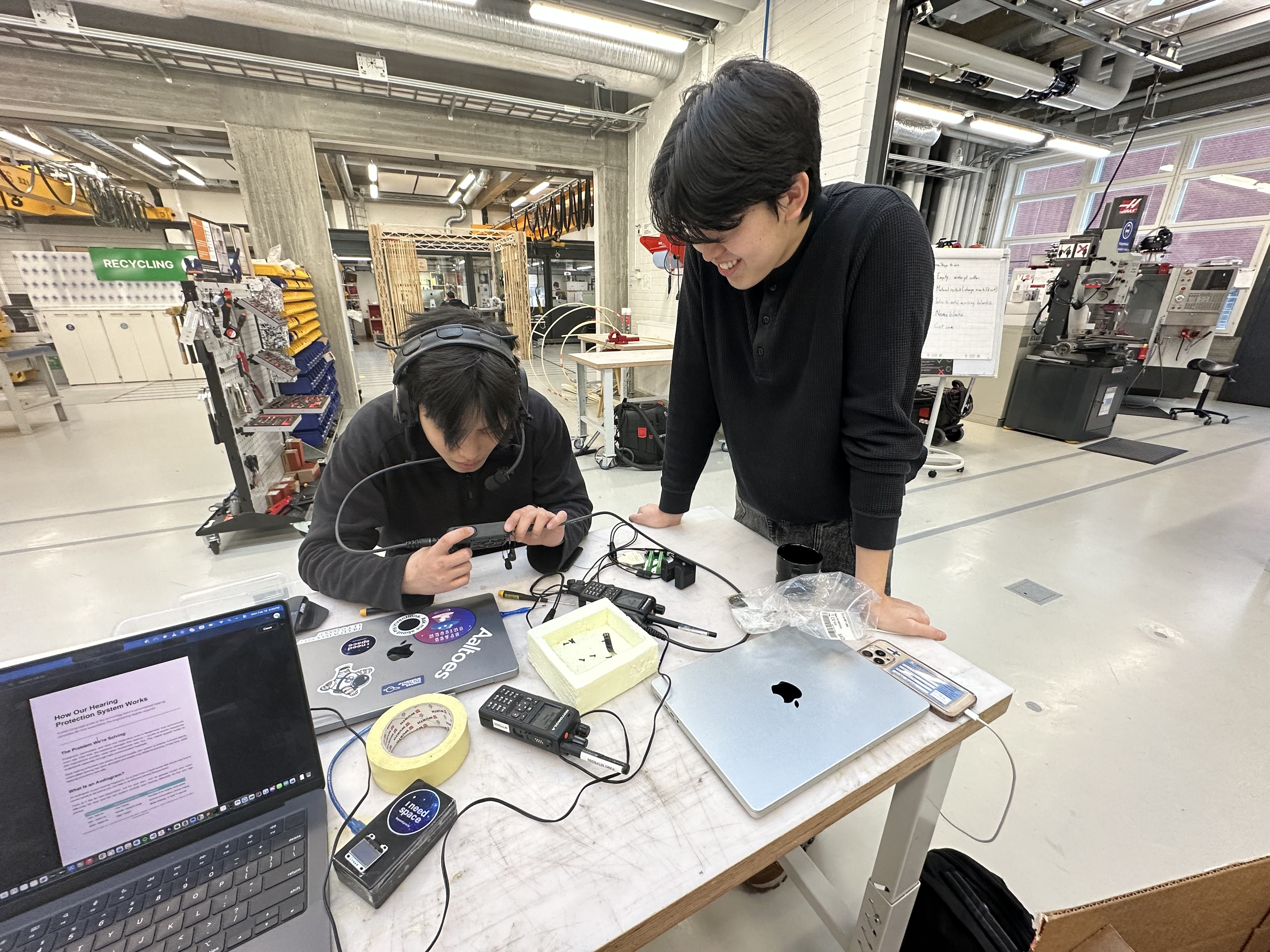
As Tech Lead (Acoustics and Audio Tech) for the Aalto PDP team, I engineered the real-time audio pipeline and DSP for embedded hardware (Teensy 3.2/4.0). I implemented the NAL-R prescription algorithm with 8-band WDRC compression and managed the overall technical architecture. The algorithm and work developed are now being mirrored to Savox and Otos for integration into their product lines.
Our Solution
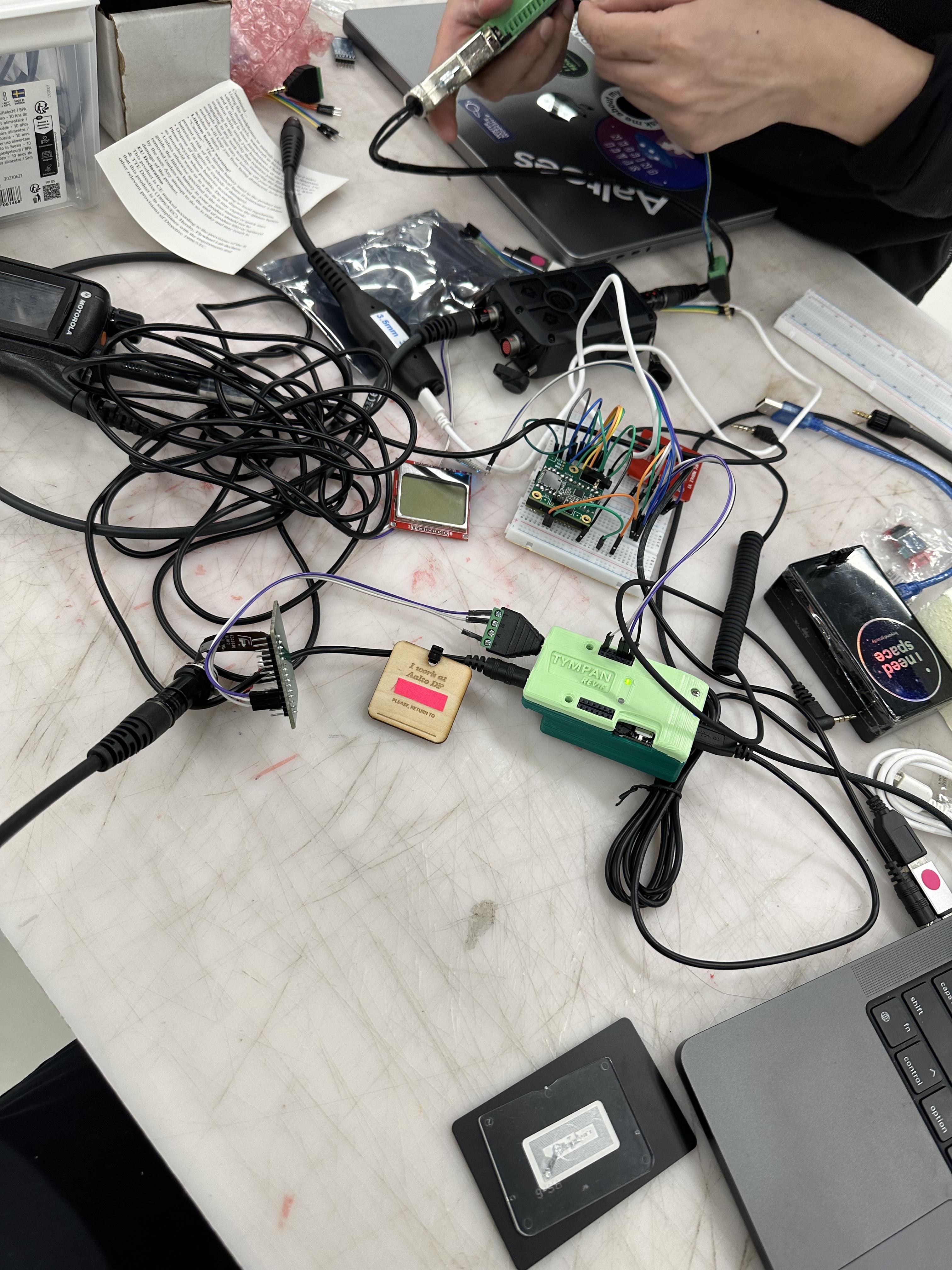
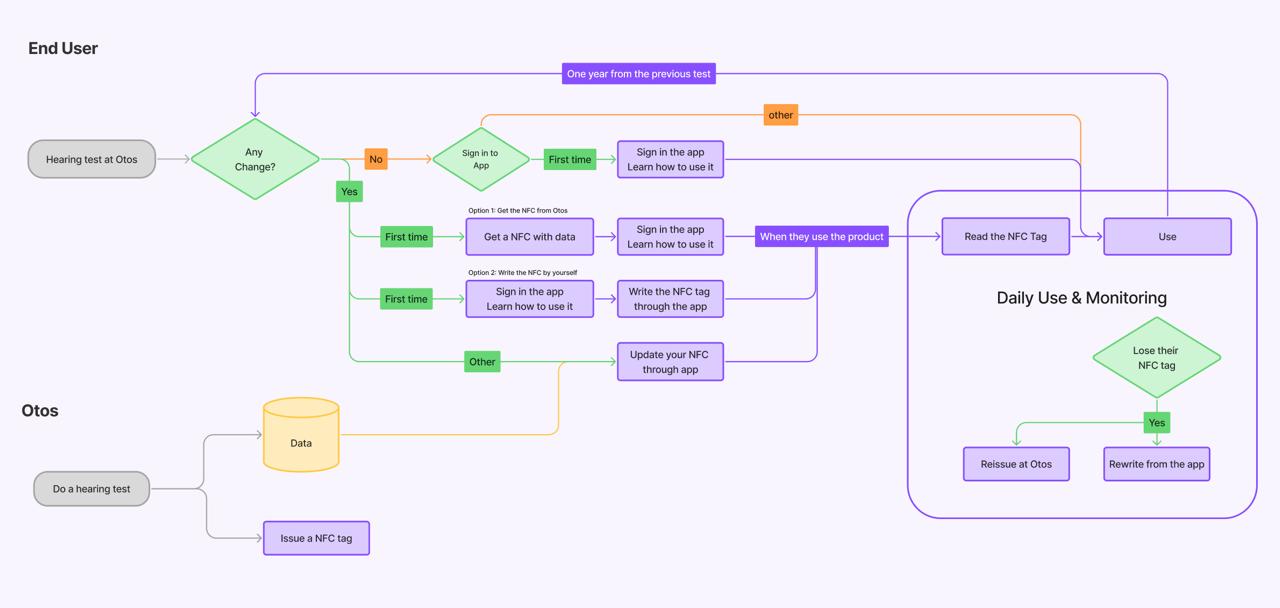
We engineered an inline NFC-enabled DSP module that reads individual audiometric data from NFC-encoded cards and applies frequency-specific amplification using the NAL-R prescription formula to maximize speech intelligibility. This work is confidential as it is being implemented by Savox and Otos, and may be patented or made available based on company rules in the future.
Key Techniques
- NAL-R Prescription Formula Implementation
- 8-Band Parametric EQ & WDRC Compression Pipeline
- Embedded DSP (Teensy 3.2/4.0, ARM Cortex-M4/M7, PJRC Audio Shield)
- NFC-based Audiogram Loading (NTAG213, HIMSA Noah format XMLs)
- Real-time Audio Processing (under 3ms latency)
- Psychoacoustic Testing with KEMAR mannequin
Project Links
Results
Validated a functional prototype that applies NAL-R correction in real-time. The developed IP is currently being integrated by Savox and Otos. Source code is private due to confidentiality agreements.
System Architecture

Project Gallery