OrbKord: Piano Analysis & Transcription
The Challenge
Most chord tools name one chord at a time from typed-in notes. They can't follow real playing with the sustain pedal down, can't take a piano recording as input, and stop at 12-tone equal temperament. I wanted one tool that names whatever a pianist is actually holding, whether it comes from a MIDI file, a keyboard or a recording.
My Role & Collaborators
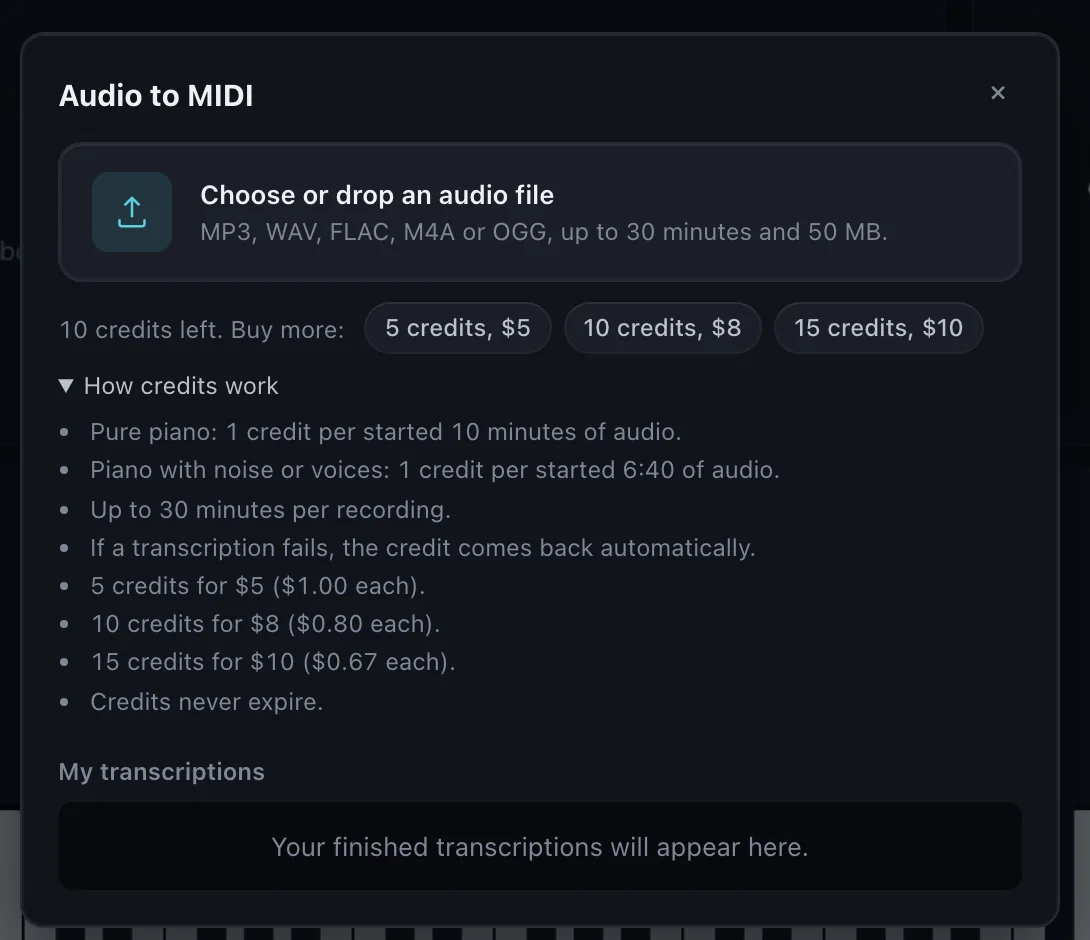
I built and deployed OrbKord end to end: the in-browser chord engine and UI, the GPU-backed transcription service, accounts, licensing and payments. It sells as a one-time $15 licence, with credits for audio-to-MIDI.
Our Solution
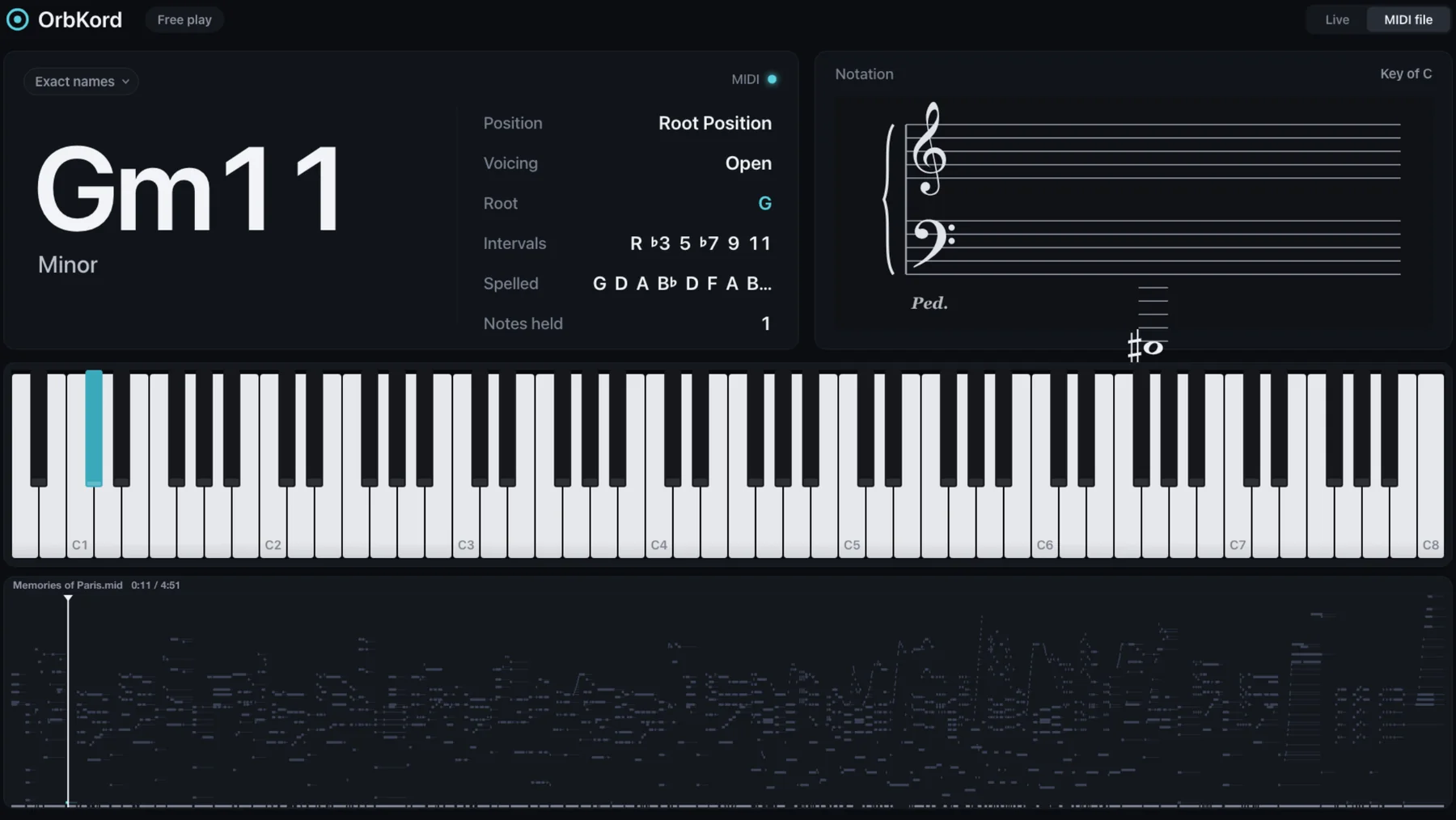
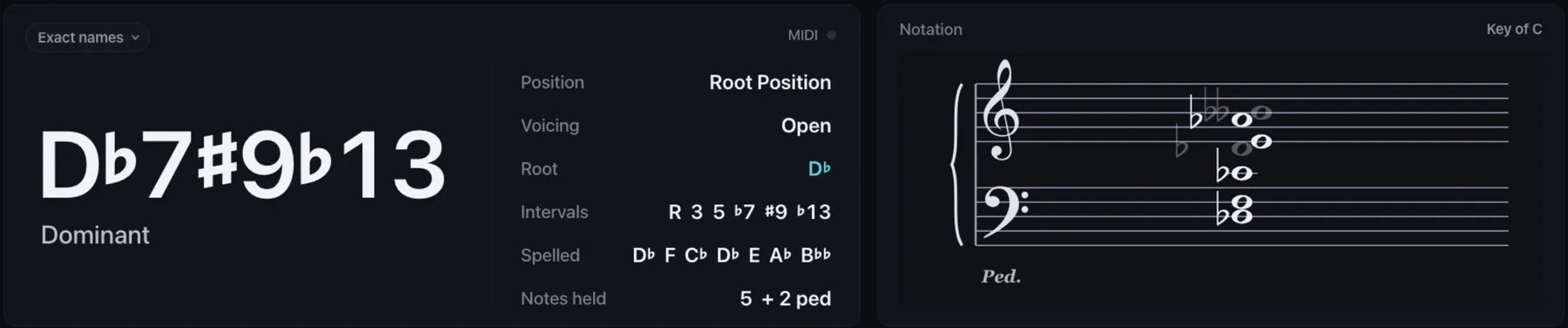
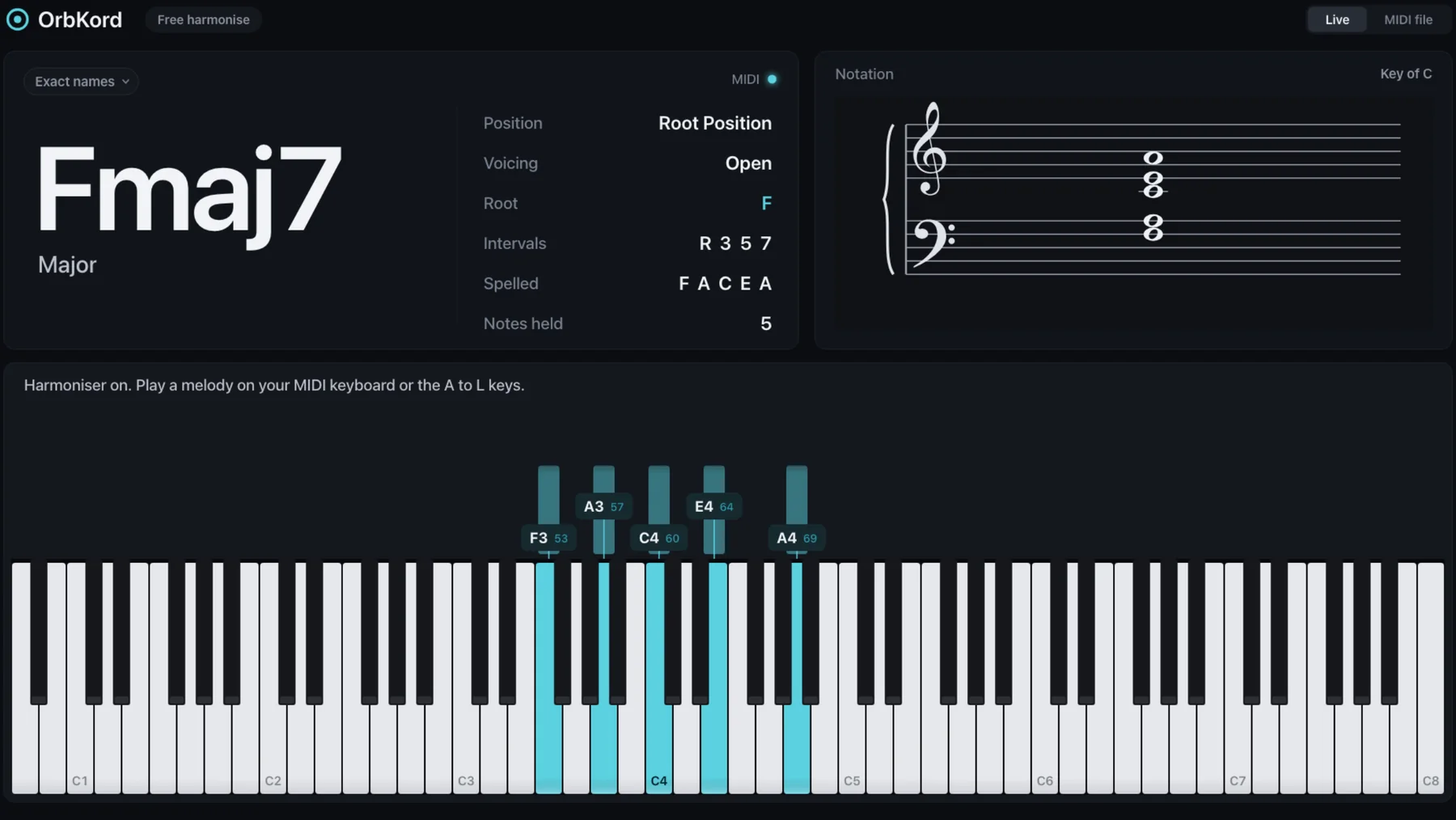
Everything except transcription runs in the browser, so the app costs almost nothing per user and can sell for a one-time price. Notes come from MIDI files, a MIDI keyboard (Web MIDI), the laptop keyboard or a piano recording. A sustain-aware recogniser names the held chord with its inversion, voicing, intervals and key-aware spelling, and draws it on a grand staff. Recordings go to a rented GPU server running TransKun-based piano transcription with custom expression post-processing (plus piano separation for noisy recordings), and the MIDI opens straight back in the app.
Key Techniques
- Sustain-aware chord recognition across 63 chord shapes, with exact, jazz and simple naming
- Key-aware note spelling in 15 keys, rendered on a grand staff
- TransKun-based piano audio-to-MIDI on GPU, with piano separation for noisy recordings
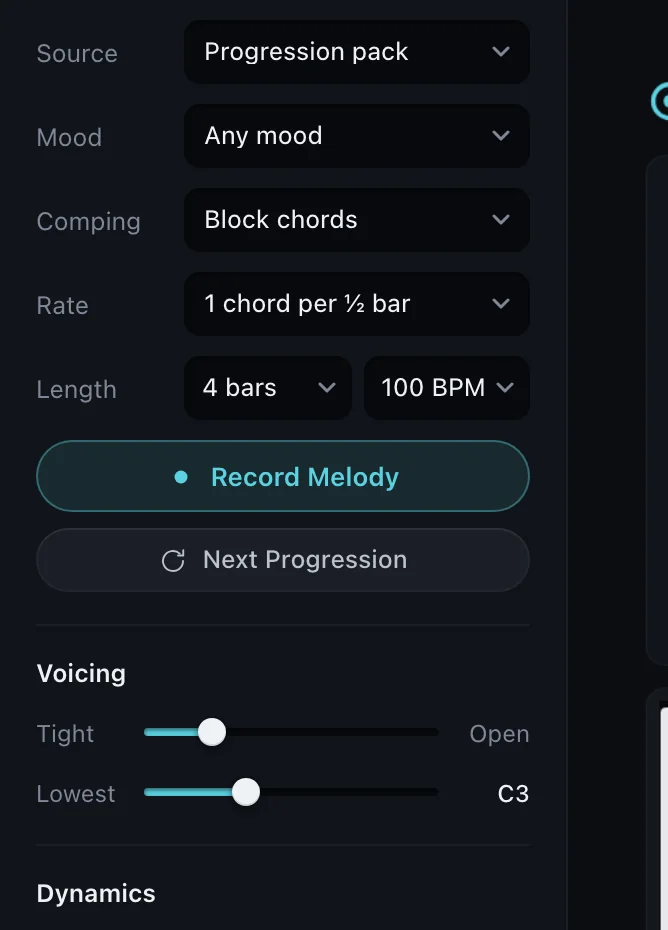
- Harmoniser and sequencer: 190 progressions, 22 moods, 5 comping styles
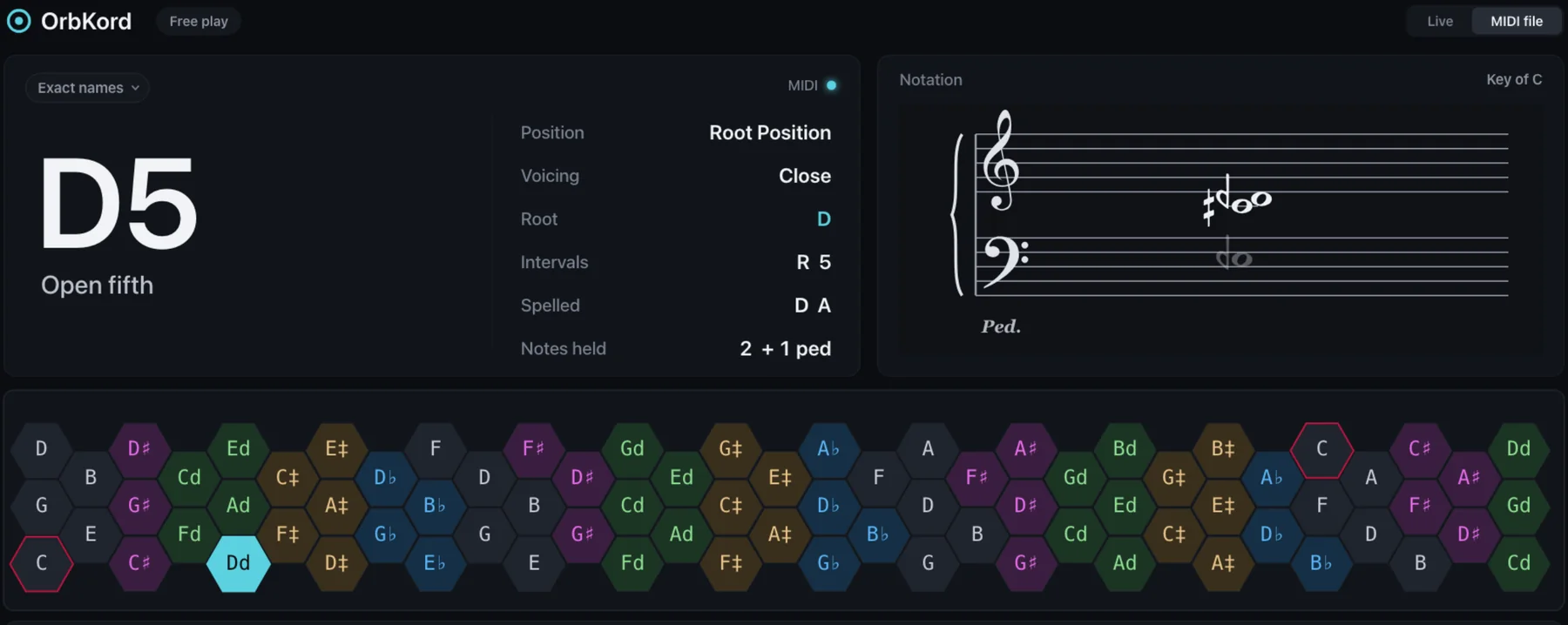
- Microtonal tunings: 19-, 31-, 41- and 53-EDO, Scala import, MPE MIDI export
- Sampled Rhodes and grand piano (6 velocity layers) with convolution reverb
- 1080p / 60 fps video export with audio
Project Links
- monthly users
- 700+
- paid licences
- 60+
- chord shapes
- 63
Results
700+ monthly users and 60+ paid licences. Run on a single MIDI file (Memories of Paris), it identified 164 distinct chords. Launched on Product Hunt on 9 November 2026.
Project Gallery